Highlights:
- LJI Instructor Haoyang Li, Ph.D., will receive nearly $4.5M through a prestigious Stephen I. Katz Early Stage Investigator Research Project R01 Grant from NIH/NIAID.
- Li will investigate a molecule called IL-1R8, which acts as the “brakes” for inflammatory signaling in the body.
- His findings may guide the development of therapies to precisely boost immune cells against cancers and pathogens, or reduce inflammation in cases of autoimmune disease.
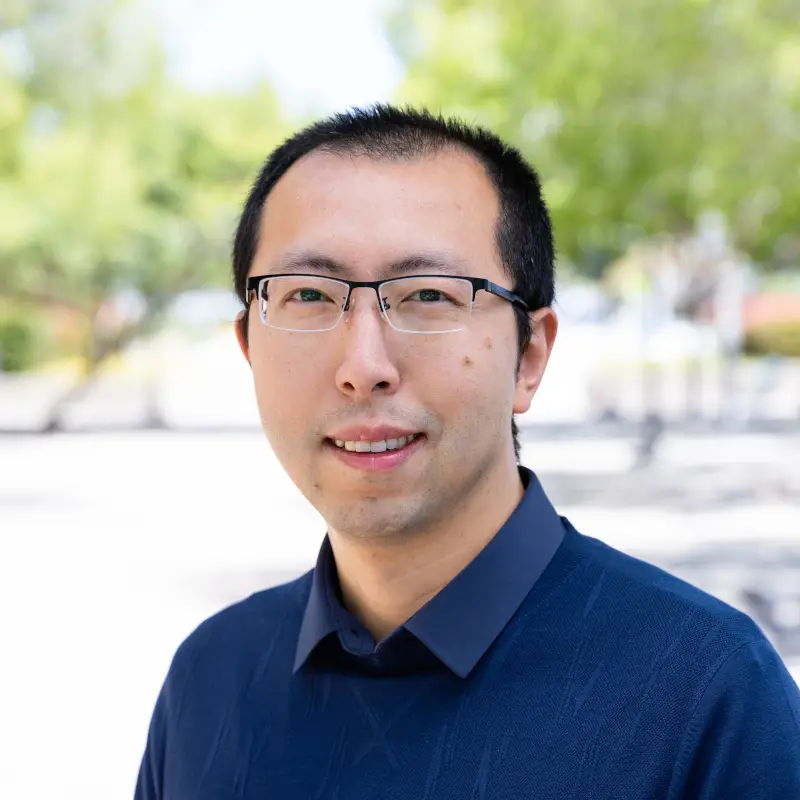
LA JOLLA, CA — La Jolla Institute for Immunology (LJI) Instructor Haoyang Li, Ph.D., has made breakthroughs in understanding the inner workings of key molecules from life-threatening pathogens such as Lassa virus and coronavirus.
Now Li is launching a new project. Li plans to zoom in on interleukin-1 receptor 8 (IL-1R8), a molecule made by our own human cells.
If Li can figure out exactly how IL-1R8 works, he could guide the development of new therapeutics that target IL-1R8. His goals are to boost the immune system’s fighting power against tumors and infections and to “calm down” overactive immune responses in cases of autoimmune disease.
As the independent principal investigator of the program, Li recently received a prestigious Stephen I. Katz Early Stage Investigator Research Project Grant from the National Institutes of Health’s National Institute of Allergy and Infectious Diseases (NIAID) to make this plan a reality.
The new NIAID R01 grant provides nearly $4.5 million over the next five years. Li will use this funding to capture high-resolution, structural images of IL-1R8 in action. He will then develop IL-1R8-targeting antibodies with the potential to modulate inflammatory signaling in the body.
“Structure studies are the basis for this very new therapeutic target and direction,” says Li. “We want to design the next-generation antibodies to tune the functions of IL-1R8 in different pathological conditions. We just need the blueprint to do that.”
IL-1R8 is a regulator and a team player
Inflammation has a good side and a bad side. Inflammation unites the immune system to fight against infections, injuries and other danger signals. However, uncontrolled inflammation can cause and accelerate autoimmune diseases and organ disorders. IL-1R8 is an “immunomodulatory” molecule, which means it helps control inflammation. “These molecules are like the ‘brakes’ to control inflammatory signaling in the body,” says Li.
But IL-1R8 doesn’t work alone. Li is aiming to understand how IL-1R8 teams up with other immune system molecules. To capture these interactions, Li will harness cryo-electron microscopy, a type of high-resolution microscopy that can reveal how molecular structures bind to each other at the atomic level.
As a current member of LJI’s Saphire Lab, Li has had great success already in using cryo-electron microscopy to solve key structures from pathogens such as Lassa virus and coronavirus. Li’s new study relies on the same tools, but for a completely novel purpose.
Advancing medicine at LJI
Once Li understands how IL-1R8 interacts and works with other immune molecules, he plans to engineer novel antibodies that bind to the right molecular locations to block or enhance those interactions.
Some current medications do increase the immune system’s fighting power, but Li’s approach offers something new. The future antibody therapeutics might allow doctors to boost immune cell responses in local tissues, rather than across the entire body. Scientists could precisely block IL-1R8 to help immune cells fight a tumor, for example, without triggering inflammation in healthy tissues.
Then there’s the autoimmune side. Li is also looking for ways to activate IL-1R8 in local tissues or organs to reduce chronic inflammation and treat autoimmune diseases (where inflammatory immune cells start attacking the body’s own organs).
“If someone is suffering from chronic inflammation, we’d better hit the brakes,” says Li.
According to the NIAID, this project is conceptually and technically innovative. With the new NIAID grant and his wealth of structural immunology experience, Li is eager to get started. “And importantly, LJI has world-class experts and facilities to support this work,” says Li.
Li wants to express his gratitude to his mentors at LJI: LJI Professor, President & CEO Erica Ollmann Saphire, Ph.D., MBA , LJI Professor and Chief Scientific Officer Shane Crotty, Ph.D., and LJI Professor Emeritus Michael Croft, Ph.D., as well as UC San Diego Professors Hal M. Hoffman, M.D., and Dennis A. Carson M.D., for their advice and support during the grant application process. Li also appreciates the NIH peer-reviewing and programming systems, which help to incubate the novel scientific ideas and support early-stage researchers like him.
Li’s project, “Illuminating Immunoregulatory Mechanisms of Interleukin-1 Receptor 8 and Novel
Therapeutic Strategies,” is supported by NIAID grant number R01AI189589.