
Beginning Laboratory Operations

The Institute began its laboratory operations in 1989 with the arrival of two pioneering immunologists, Dr. Kimishige Ishizaka and Dr. Teruko Ishizaka, from Johns Hopkins University in Baltimore, Maryland. The Ishizakas received worldwide recognition in 1966 for their discovery of the IgE (immunoglobulin E) protein, a molecule that induces allergic reactions in the human body.
Dr. Kimishige Ishizaka appointed President/Scientific Director of the Institute

In 1991 Dr. Kimishige Ishizaka was appointed President/Scientific Director of the Institute and served in this role until his retirement in 1995. Under Dr. Ishizaka's leadership, LJI quickly established a worldwide reputation for excellence in allergy and immunology research.
Dr. Howard Grey leads the Institute

Dr. Howard Grey joined LJI in 1995, succeeding Dr. Ishizaka as president and scientific director of the Institute. During the next several years, Dr. Grey leads the Institute through a period of growth that includesthe recruitment of prominent faculty members and the formation of a program to accelerate the commercial development of LJI's research and drug discovery plans. During Dr. Grey's tenure the Institute more than doubles in size, achieved significant scientific advances, and further established itself as a leader in immunologic research.
Institute moves to new building on Science Center Drive
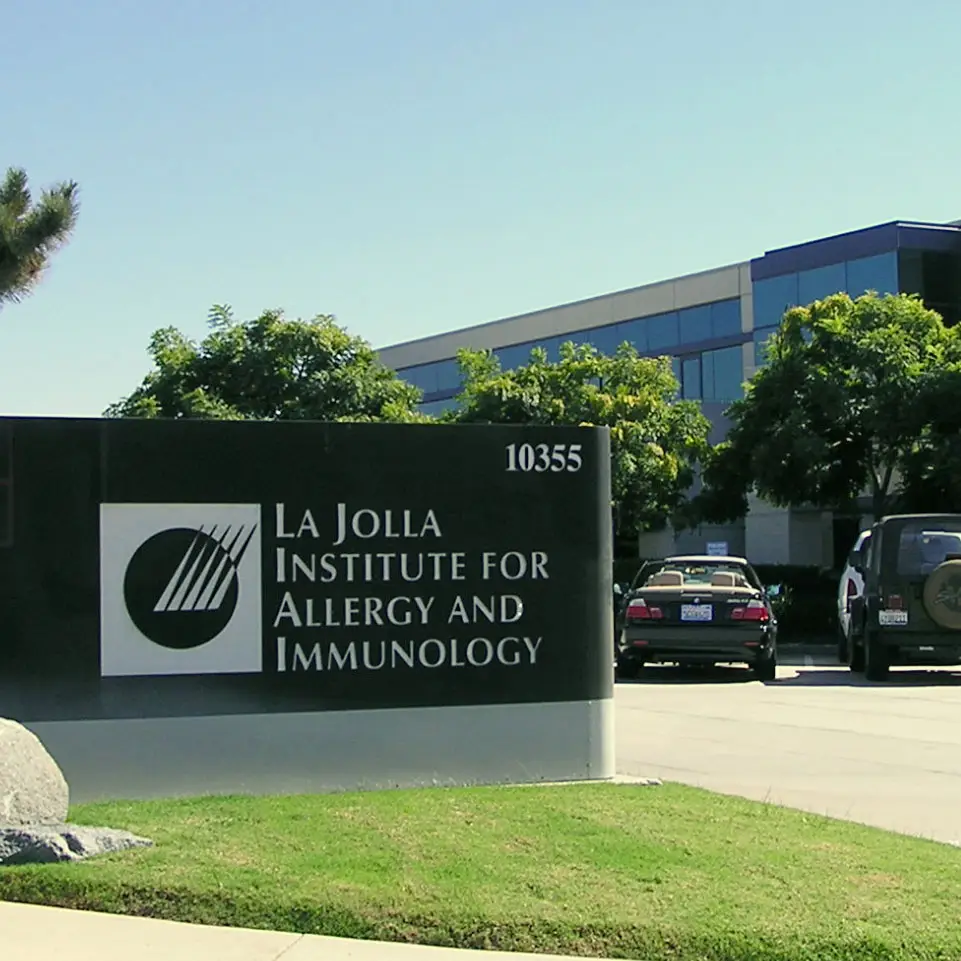
LJI moves from its initial location on Torrey Pines Road in La Jolla to a newly designed and constructed facility on Science Center Drive on the Torrey Pines Mesa.
Dr. Mitchell Kronenberg appointed president and scientific director

Since its inception, LJI has benefited from strong leadership. In 2003, Dr. Mitchell Kronenberg was appointed as president and scientific director. His vision for the future has included the development of a new research facility to accommodate the Institute’s growth, an accompanying expansion of LJI faculty and laboratories, the creation of an Infectious Disease Center at LJI, and the development of a joint Center for Immunology with UCSD.
New world-class research facility opens
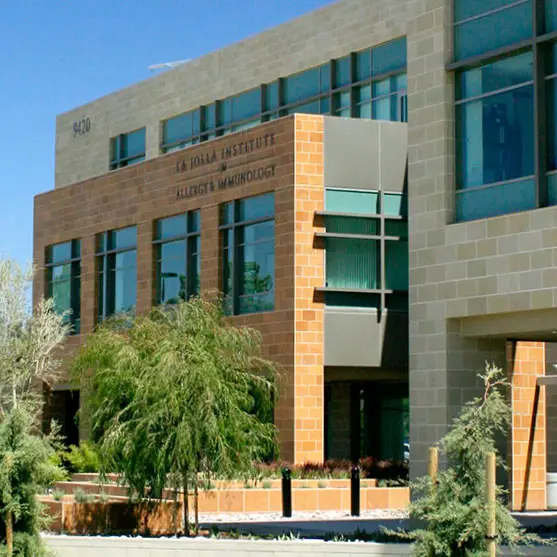
The Institute opens a new state-of-the-art research facility located in the new UC San Diego Science Research Park. The building includes an Emerging Infectious Disease and Biodefense Center, one of the few such dedicated research centers in San Diego. The Center is also home to the world’s largest database on how the immune system responds to infectious disease, which was developed in collaboration with the National Institute of Allergy & Infectious Diseases.
La Jolla Institute opens major RNAi Center for Identifying Genetic Triggers of Disease
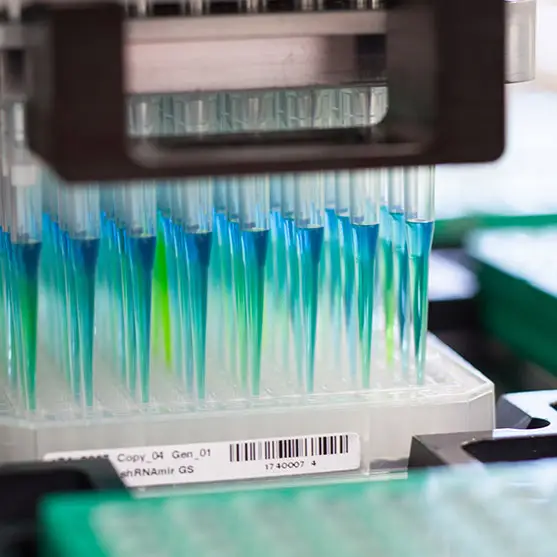
A major Center that will propel scientific efforts to pinpoint the specific genes involved in causing immune diseases, cancer and other diseases will be opened today at the La Jolla Institute for Immunology. Utilizing a Nobel prize-winning technology known as RNA interference (RNAi), the Institute’s new RNAi Center will be a catalyst for accelerating discovery toward new therapies against myriad diseases, and is one of a small, select group of dedicated RNAi facilities worldwide.
Institute wins $22 million contract renewal for innovative worldwide research tool
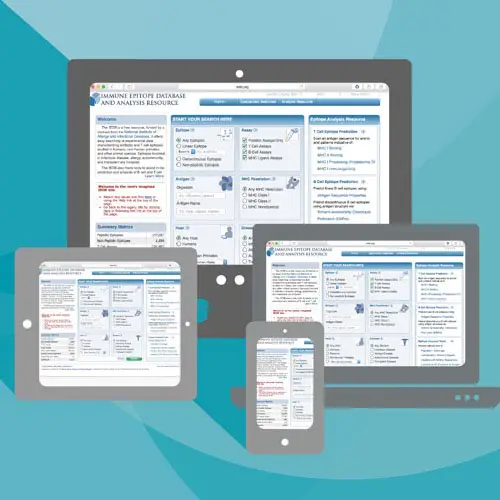
The National Institutes of Health (NIH) awards a $22 million, seven-year contract renewal to the La Jolla Institute to continue its role as host and developer of the Immune Epitope Database (IEDB), the world's largest collection of scientific data on how the immune system responds to a wide range of diseases. The database, launched in 2006, was designed and developed by the La Jolla Institute under a multi-million dollar competitive contract from the National Institute for Allergy and Infectious Diseases (NIAID), part of the NIH.
Institute announces affiliation with UC San Diego Health System
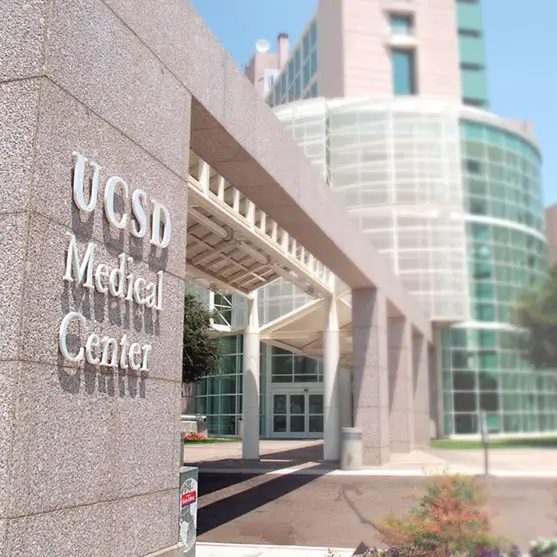
The agreement formalizes and codifies an informal, decades-old relationship built on shared research interests and a long history of successful scientific collaboration. The multi-year agreement with UCSD facilitates joint faculty appointments, enhances the range and depth of collaboration between the two organizations, and promotes closer integration between basic immunology research and clinical medicine to speed the development of treatments for diseases of the immune system.
LJI launches Center for Sex-based Differences in the Immune System

LJI scientists came together to launch a new research center, dedicated to understanding key differences between the immune responses in male and female individuals, down to individual immune cells. Researchers aim to shed light on why many diseases, such as infectious diseases and autoimmune disease, affect men and women differently, with the goal of finding better therapeutic approaches for all people.
Dr. Erica Ollmann Saphire takes the helm as President and CEO

As a leader in infectious disease research, Dr. Saphire has dedicated her career to bringing scientists together to face the toughest health threats. Dr. Saphire will capitalize on the Institute’s focus on human immunity and the depth of expertise at LJI to bring to bear the power of our immune system on heart disease, autoimmunity, cancer, and infectious disease.
LJI and Kyowa Kirin celebrate historic 35-year partnership

LJI and Kyowa Kirin celebrated the 35th anniversary of one of the most enduring alliances between academia and industry. This partnership has brought international researchers together, produced groundbreaking discoveries in immunology, and supported first-in-class therapies for rare disease patients.