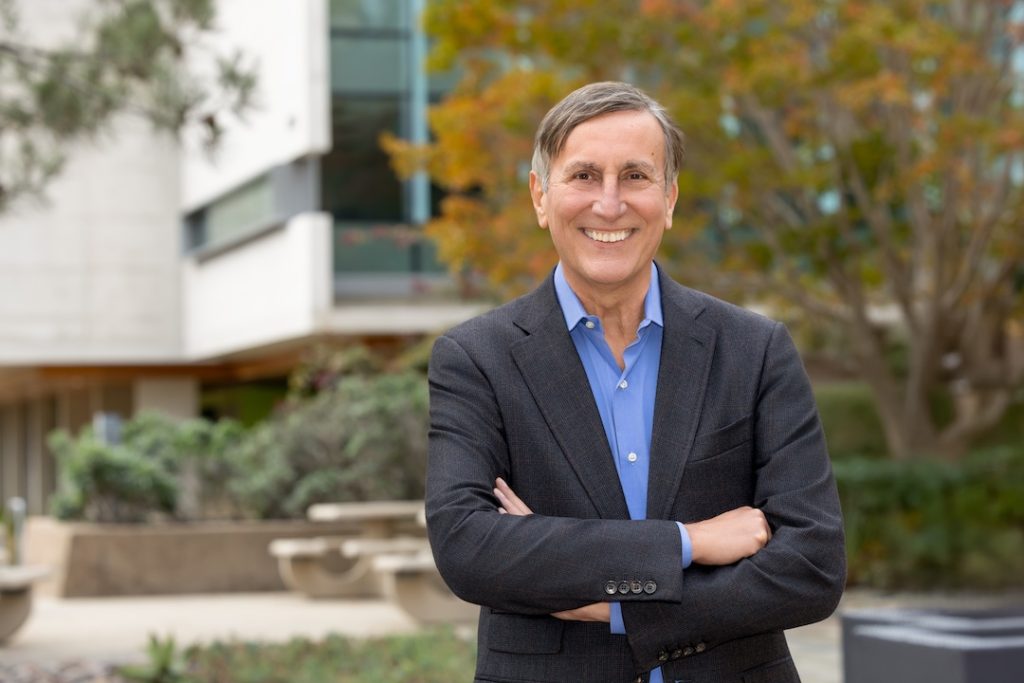
LA JOLLA, CA—La Jolla Institute for Immunology (LJI) Professor Alessandro Sette, Dr.Biol.Sci., will receive the prestigious AAI-Steinman Award for Human Immunology Research for his groundbreaking research into the inner workings of the human immune system.
This award from the American Association of Immunologists (AAI) recognizes Sette’s dedication to understanding how our immune cells respond to viruses, cancers, and other threats.
“I’m honored to receive this award,” says Sette. “This reflects on our whole Institute. The research conducted at La Jolla Institute has a profound impact on human immunology.”
Sette is a renowned expert on human T cells, the immune cells that adapt to recognize and fight infections from viruses, bacteria, parasites, and other pathogens. Sette’s work has shown how T cells help prevent severe disease, and he has uncovered the roles of T cells in severe allergies and even neurodegenerative diseases such as Parkinson’s disease and ALS.
Sette’s research shows how we might develop vaccines and new therapies that harness T cells to keep us healthy.
A legacy in infectious disease research
For the last 35 years, Sette has been at the forefront of infectious disease research. His studies have shown how T cells combat pertussis (whooping cough), COVID-19, mpox, and many other infections. His work during the COVID-19 pandemic emphasized how important it is for vaccines to stimulate protective T cell responses. In fact, Sette and his LJI colleagues published the first head-to-head comparison of four COVID-19 vaccine approaches.
Sette’s efforts have fueled human immunology research around the world. In 2003, Sette founded the Immune Epitope Database (IEDB), funded by the National Institute of Allergy and Infectious Disease. This database allows scientists to upload their own T cell data and compare exactly how T cells respond to specific molecules—called antigens—from allergens and pathogens.
“We can now look at how the immune system recognizes and targets antigens with a level of granularity and detail that was inconceivable when I first started my career in human immunology,” says Sette.
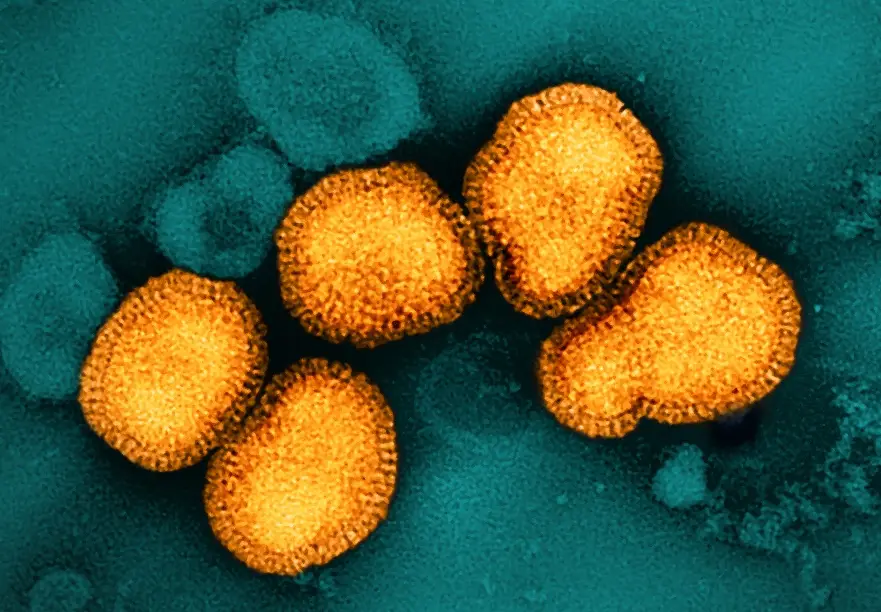
The IEDB has also grown into a critical resource in the fast-moving field of pandemic preparedness. In early 2025, Sette and his colleagues analyzed IEDB data and discovered that many people likely already have T cells with the power to fight H5N1, a “highly pathogenic” variant of avian influenza.
T cells in cancer and neurodegenerative diseases
Sette’s work goes far beyond infectious diseases. In 2021, Sette and LJI Professor Bjoern Peters, Ph.D., launched the Cancer Epitope Database and Analysis Resource (CEDAR), funded by the National Cancer Institute, where scientists can share data and access analysis tools to better understand how human T cells target and destroy cancers.
Sette has also revealed a hidden side of the immune system. In a series of studies, Sette showed that inflammatory T cells may play a role in neurodegenerative diseases such as Parkinson’s disease. Just last year, Sette and his collaborators at Columbia University Medical Center published the first evidence that amyotrophic lateral sclerosis (ALS) also appears to be an autoimmune disease.
“We’re finding that immune cells have an active role in some neurodegenerative diseases, which goes against what people originally thought,” says Sette.
At each point in his career, Sette has focused on how T cell research can improve the lives of real patients. “It’s important to work closely with patients, hospitals, clinics, and clinical researchers to get to see what patients go through,” says Sette. “Ultimately, we must never forget that the whole point of human immunology is to help patients.”
Sette will receive the award at IMMUNOLOGY2026™, the 109th meeting of the American Association of Immunologists, held between Apr. 15 and 19 in Boston, MA.